Nylon Rope Guide: Uses, Benefits, and Strengths
Nylon was the first synthetic fiber widely adopted for rope. Decades later, it remains a leading choice for applications that require strength and flexibility. Choosing the right nylon rope depends on how you’ll use it. Construction affects strength, handling, and splicing options, while environmental conditions can influence performance and service life.
This guide covers the benefits of nylon rope, its most common uses, the differences between rope constructions, and what to consider when selecting the right size for your application.
What Is Nylon Rope?
Nylon rope is made from synthetic polyamide fibers known for their strength, elasticity, and abrasion resistance. First adopted as a synthetic alternative to natural fibers, nylon remains a go-to choice for applications that require a rope to handle dynamic loads.
One of nylon’s defining characteristics is its ability to stretch under tension. When a load surges or shifts, the rope stretches and absorbs energy instead of immediately transferring the full force to the anchor point or connected hardware.
Nylon also resists abrasion, rot, and mildew. However, it absorbs water, which reduces its strength when wet, and prolonged sunlight exposure can degrade the fibers. Understanding these characteristics will help you decide whether nylon is the right material for your jobsite.
What Is Nylon Rope Used For?
Nylon rope works well in applications where strength and shock absorption are priorities.
Marine and Mooring Applications
Nylon is commonly used for anchor lines and mooring lines because it stretches as boats move with waves, wakes, and wind. This elasticity helps absorb sudden loads and reduces strain on cleats, anchors, and other hardware. Both 3-strand nylon and double braid nylon are common options for marine use.
Load Securing
Nylon’s flexibility lets it accommodate movement as cargo settles or shifts. It can be useful in suitable tie-down and securing applications when the rope and complete system are properly rated.
Industrial and Utility Work
Nylon rope is used for general-purpose lines, hand lines, and certain material-handling applications. Its abrasion resistance and flexibility make it useful in many industrial environments.
Double-braid nylon can be a good option when consistent handling and rotation resistance are important. Any rope used for lifting or supporting a suspended load must be rated for that specific application.
Pulleys and General Utility Lines
Solid braid nylon offers a firm, round construction that maintains its shape over pulleys and sheaves. It also holds knots well, making it useful for certain utility lines and pulley systems.
Benefits of Nylon Rope
Nylon’s material properties make it a versatile option for many demanding applications.
High strength. Nylon offers substantial tensile strength for its diameter, making it suitable for many marine, industrial, and utility applications.
Shock absorption. Its elasticity helps absorb energy when loads change suddenly. This is particularly useful for anchor lines and purpose-built recovery ropes.
Abrasion resistance. Nylon holds up well to many forms of surface wear, although friction heat and internal abrasion can still damage the rope.
Flexibility. Nylon is generally easy to handle and can accommodate repeated movement under load.
Resistance to rot and mildew. Unlike natural-fiber ropes, nylon does not rot or develop mildew in the same way.
What Are the Limitations of Nylon Rope?
Nylon has several characteristics to account for when selecting a rope.
- Reduced wet strength: Wet nylon typically loses about 10% to 15% of its dry strength.
- Stretch under load: Its elasticity can reduce precision in applications that require a line to maintain a consistent length.
- Heat sensitivity: Friction can damage or fuse fibers well below nylon’s melting point.
- UV exposure: Prolonged sunlight can degrade the rope over time.
- Snapback risk: A stretched rope under high tension can release stored energy violently if the rope or a connection fails.
Types of Nylon Rope
Erin Rope offers nylon products in several constructions, each designed for different handling characteristics and applications. From heavy-duty lines with a wire cable core to lightweight mason line, choosing the right product starts with understanding how it will be used.
3-Strand Twisted Nylon Rope

Erin Rope’s 3-strand twisted nylon features a balanced construction designed to reduce hockling, or kinking, when tension changes. Its high elasticity makes it useful for applications that benefit from shock absorption, while its construction allows for straightforward hand splicing.
Best for: Marine anchor and mooring lines, and other applications where stretch and easy splicing are priorities.
24-Carrier Double Braid Nylon Rope
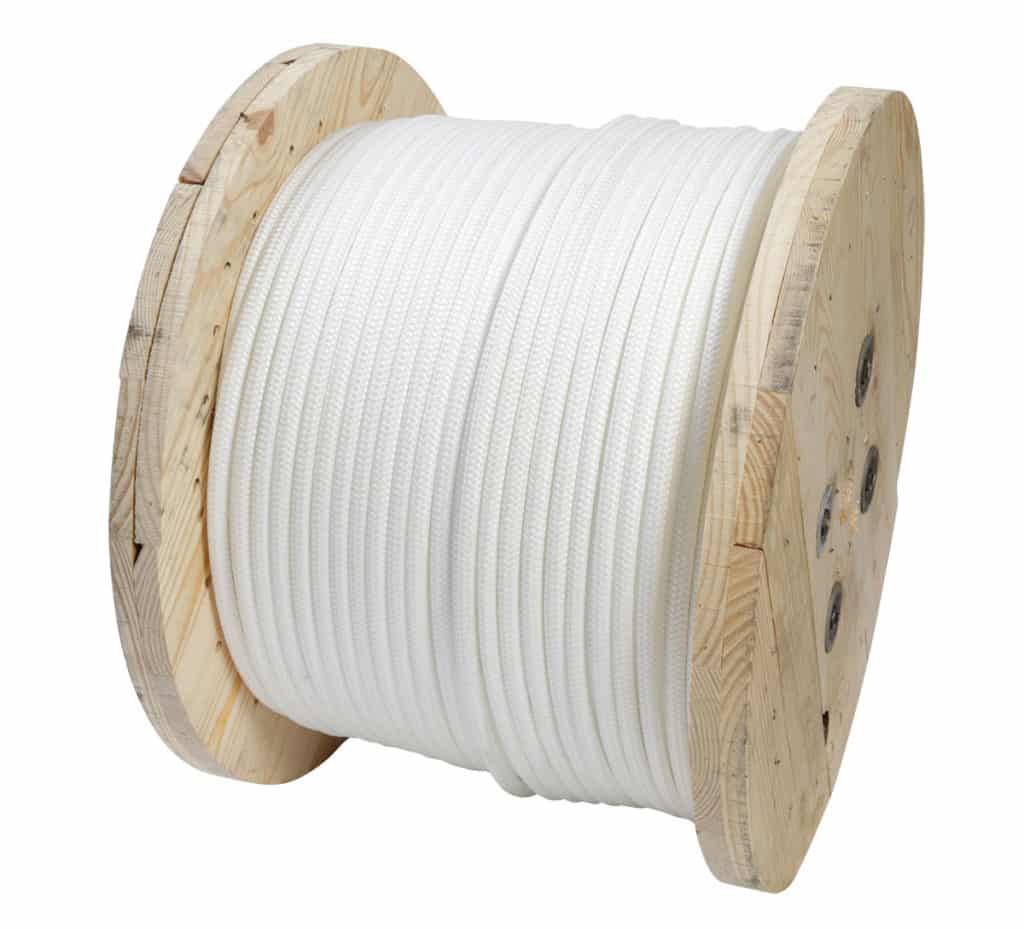
Double braid nylon combines a braided cover and core, with both components sharing the load. This construction provides torque-free handling and smooth movement through compatible blocks and chocks.
Best for: Marine and industrial applications where controlled handling and high strength per diameter are important.
Solid Braid Nylon Rope

Solid braid nylon maintains a round profile over pulleys and sheaves while remaining flexible. Its construction also provides good abrasion resistance and elasticity.
Best for: General-purpose marine, industrial, and utility applications that require a flexible rope with a firm, round shape.
Solid Braid Nylon with Galvanized Aircraft Cable Core

For applications that require additional reinforcement, Erin Rope offers solid braid nylon with a galvanized aircraft cable core. The construction combines a 7×7 galvanized aircraft cable center with a 12-carrier nylon braid exterior.
The cable core adds strength, while the nylon exterior provides flexibility and resistance to environmental exposure. The rope stays round over pulleys, making it particularly useful for flagpole halyards and certain marine and industrial applications.
Best for: Flagpole halyards, utility systems, and industrial applications that benefit from a reinforced cable core.
8-Carrier Diamond Braid Nylon

Erin Rope’s 8-carrier diamond braid nylon features a nylon jacket over a parallel synthetic core. The braided exterior provides abrasion resistance, while the construction offers flexibility, elasticity, and reliable knot holding.
This economical general-purpose cord works well across marine, industrial, and everyday utility applications. Its shock-absorbing ability makes it useful when some stretch is desirable.
Best for: General-purpose cord applications that require flexibility, abrasion resistance, and shock absorption.
Premium Nylon Seine Twine (Mason Line)
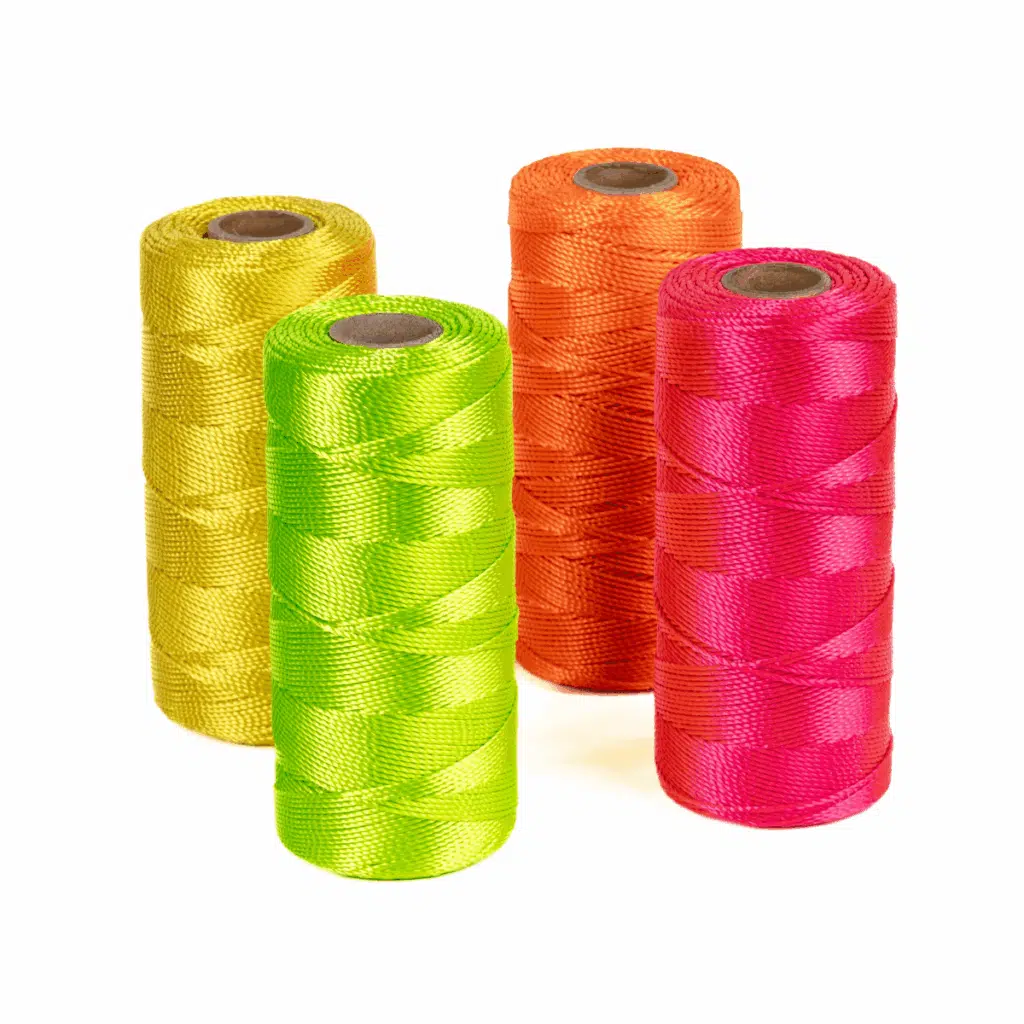
Erin Rope offers premium nylon seine twine in both braided and twisted constructions. Also known as mason line, this durable, visible twine is used for masonry layout, alignment, and other tasks that require a reliable reference line.
Both options offer abrasion resistance and good knot retention. The main difference is construction: braided twine provides a smooth, consistent line, while twisted twine is easy to handle and splice.
Best for: Masonry layout, alignment work, and other applications that require a durable, highly visible line.
Elastic Shock Cord (Bungee Cord)
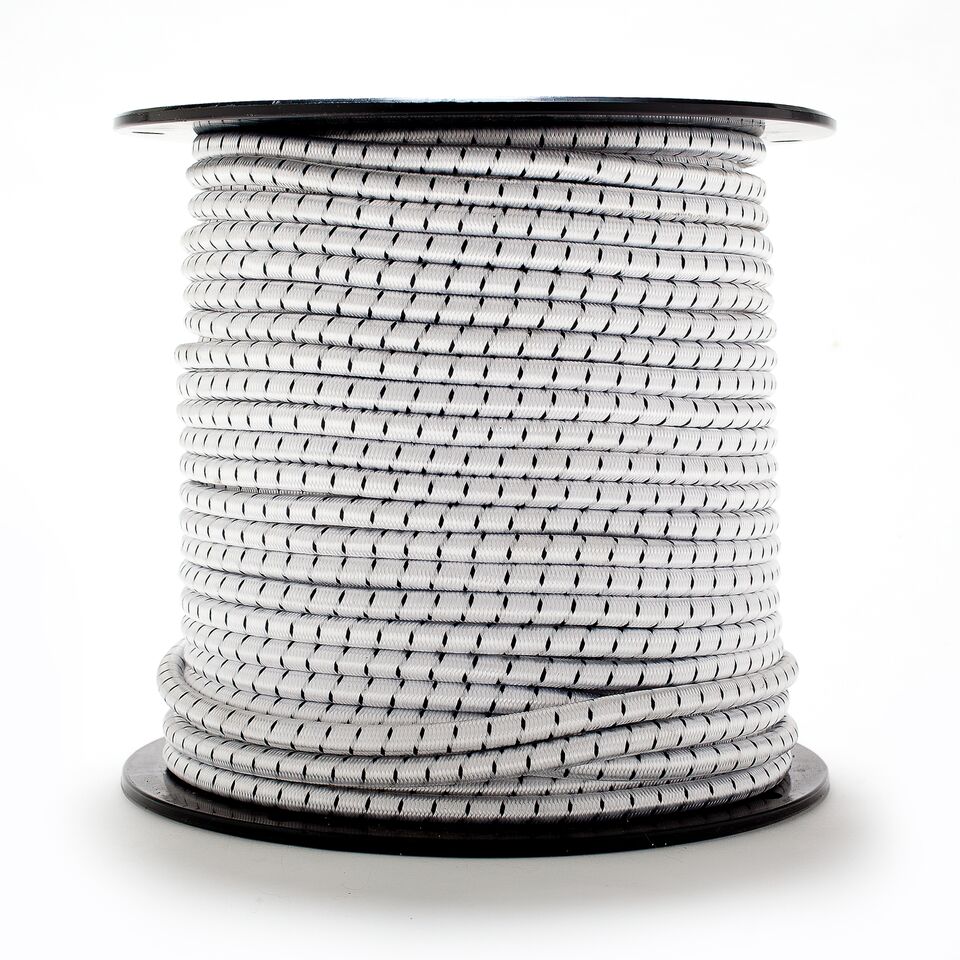
Elastic shock cord combines a braided nylon cover with an elastic core to provide substantial stretch and recovery. The cover protects the core from abrasion, while the cord’s elasticity accommodates movement and maintains a flexible hold.
Erin Rope’s shock cord comes in several diameters and lengths to suit different project needs.
Best for: Applications that require elastic tension, flexibility, and repeated stretching.
Which Nylon Rope Is Right for You?
| If you need… | Consider… |
|---|---|
| Stretch and shock absorption for marine lines | 3-strand twisted nylon |
| Torque-free handling and high strength per diameter | 24-carrier double braid nylon |
| A firm, round rope for pulleys and utility work | Solid braid nylon |
| A reinforced line with a cable center | Solid braid nylon with galvanized aircraft cable core |
| Flexible, abrasion-resistant general-purpose cord | 8-carrier diamond braid nylon |
| A visible line for masonry layout and alignment | Braided or twisted nylon seine twine |
| Elastic stretch for a flexible hold | Elastic shock cord |
Before selecting a rope, confirm the diameter, minimum breaking strength, working load requirements, and compatibility with your equipment. Construction and material properties vary by product, so use the specifications for the exact rope you plan to purchase.
Nylon Rope Strength and Sizes
Nylon rope strength varies by diameter, construction, and manufacturer. A larger diameter generally provides greater tensile strength, but ropes of the same diameter can have different ratings depending on how they are made.
The following Erin Rope products illustrate those differences.
| Construction | Diameter | Average tensile strength | Reel length |
|---|---|---|---|
| 3-Strand Twisted | 1/4 in | 1,490 lb | 600 ft |
| 3-Strand Twisted | 3/8 in | 3,340 lb | 600 ft |
| 3-Strand Twisted | 1/2 in | 5,750 lb | 600 ft |
| 3-Strand Twisted | 5/8 in | 9,350 lb | 600 ft |
| 24-Carrier Double Braid | 1/2 in | 7,400 lb | 600 ft |
| Solid Braid | 1/4 in | 1,325 lb | 1,000 ft |
These figures represent average tensile strengths for new, unused rope. They are not working load limits. Additional diameters are available. Visit the Nylon Rope product page for current specifications and available options.
Nylon vs. Polyester Rope: Which Should You Choose?
Nylon and polyester are both strong synthetic rope materials, but they perform differently under load and in wet conditions.
| Feature | Nylon | Polyester |
|---|---|---|
| Stretch | Higher | Lower |
| Shock absorption | Excellent for suitable applications | Lower than nylon |
| Wet strength | Typically decreases by 10% to 15% | Generally retained |
| Floating | Sinks | Sinks |
| Common applications | Mooring, anchor lines, recovery | Applications requiring lower stretch and better wet-strength retention |
Choose nylon when elasticity and energy absorption are key requirements.
Consider polyester when you need lower stretch or more consistent strength in wet conditions.
The best choice depends on the load, operating environment, and intended use. Read Polyester vs. Nylon Rope for a more detailed comparison, or explore our Complete Rope Materials Guide.
Nylon Rope Care, Inspection and Storage
Proper care extends rope service life and helps you identify damage before it becomes a safety concern.
Inspect Before Use
Check the rope for:
- Cuts, broken yarns, and excessive abrasion
- Glazed or fused areas that may indicate friction heat
- Stiff or hard spots that could signal crushing or internal damage
- Discoloration that may indicate chemical exposure or UV degradation
- Unusual changes in length or construction
For 3-strand rope, inspect between the strands when possible. Powdered fiber can indicate internal abrasion that is difficult to see from the surface.
Store Rope Correctly
Keep nylon rope clean and dry when practical. Store it away from direct sunlight, excessive heat, chemicals, and sharp edges. Follow the manufacturer’s recommendations for cleaning, drying and storage.
Know When to Retire Rope
Remove rope from service if it shows significant damage, has been exposed to a severe shock load, or has an uncertain service history. Visible appearance alone can’t confirm a rope is safe. Follow the manufacturer’s inspection and retirement criteria, especially for lifting and life-safety applications.
For more information, see Rope Storage, Inspection and Maintenance Tips.
Frequently Asked Questions About Nylon Rope
What is nylon rope best used for?
Nylon rope is best suited for applications where strength and stretch matter, including anchor and mooring lines, purpose-built vehicle recovery ropes, and certain industrial and utility applications.
Is nylon rope strong?
Yes. Nylon offers high tensile strength relative to its diameter. Actual strength depends on the rope’s construction, diameter, condition, and manufacturer rating.
Does nylon rope stretch?
Yes. Nylon is known for its elasticity. Stretch varies by construction and load, with 3-strand and specialty kinetic recovery ropes offering substantial elongation.
Does nylon rope lose strength when wet?
Yes. Wet nylon typically loses about 10% to 15% of its dry strength. Use the appropriate wet-service rating when sizing rope for water-based applications.
Does nylon rope float?
No. Nylon sinks in water. If flotation is a requirement, polypropylene may be a better choice.
Is nylon rope suitable for lifting?
Only when the specific rope and complete system are rated for the intended lifting application. Select suitable hardware, follow the manufacturer’s instructions, and comply with applicable safety requirements.
Can nylon rope be used for cable pulling?
Standard nylon rope is generally unsuitable for cable pulling because its stretch can store dangerous amounts of energy under tension. Use a purpose-built, low-stretch pulling rope rated for the equipment and application.
Find the Right Nylon Rope for Your Application
Choosing nylon rope starts with understanding the job. Consider the load, required stretch, environmental conditions, and how the rope will connect to your equipment.
Erin Rope offers 3-strand twisted, 24-carrier double braid, and solid braid nylon constructions for different applications. Compare available diameters and product specifications on our Nylon Rope product page, or contact our team for help selecting a rope that meets your requirements.