What Is Abaca Fiber? The Natural Fiber Behind Manila Rope
Every coil of natural-fiber Manila rope starts as an abaca plant grown in the Philippines. The plant is hand-harvested, stripped with a knife, and dried in the sun. That supply chain has operated for well over a century and produces a strong, affordable natural fiber that is widely recognized today.
Manila rope is a staple in the rope industry. This guide covers where abaca fiber comes from, how it is made into rope, what makes it the strongest natural plant fiber available, and why it remains cost-effective in an era of engineered synthetic ropes.
What Is Abaca Fiber?
Abaca (Musa textilis) is a member of the banana family, native to the Philippines. It grows as a cluster of tall stalks rising from a shared root system, reaching up to 8 meters in height. It resembles the fruiting banana plant, though abaca produces a slender, glossy pseudostem and inedible fruit.
Abaca fiber is known internationally as Manila hemp. However, Abaca has no botanical relationship to true hemp. The fiber comes from the leaf sheaths wrapping the pseudostem, layered like the rings of a leek. Those sheaths carry long, coarse fiber bundles running the full length of the stalk.
Where Abaca Fiber Comes From
The Philippines supplies roughly 85 percent of the world’s abaca fiber, making it the dominant global source. Ecuador is the second largest producer, with smaller volumes from Costa Rica and Indonesia.
Growing conditions explain the concentration of abaca in these climates. Abaca requires consistent rainfall, high humidity, warm temperatures year-round, and well-drained volcanic soil. It also performs better in partial shade than in full sun, which is why it thrives in the understory of Philippine hillside farms.
How Abaca Fiber Is Harvested and Processed
Harvest
An abaca plant reaches first harvest 18 to 24 months after planting, then produces on a rolling cycle every three to four months as new suckers mature. It’s a perennial that regenerates itself, so a healthy stand produces for years without replanting.
Harvest runs in four stages. Cleaning clears weeds from the base of the stalk. Topping cuts the leaves away with a curved knife on a long pole. Tumbling fells the stalk. Tuxying separates the fiber-bearing layers.
Tuxying
Tuxying determines fiber quality. A thin knife is inserted between the outer and inner layers of each leaf sheath and drawn the full length, separating them. The outer layer, called a tuxy, carries the primary fiber bundles. Each sheath yields two to four tuxies.
Stripping and Drying
Stripping pulls the fiber bundles free of the pulp binding them. Hand stripping, known locally as hagotan, draws the tuxy under a knife held against a block by a weighted foot pedal. Spindle stripping performs the same action mechanically, increasing output and making the work accessible to laborers who cannot meet the physical demands of hand stripping. Decortication processes the whole leaf sheath and recovers both primary and secondary fibers.
Stripped fiber sun-dries for one to three days. Best practice completes tumbling, tuxying, and stripping within a single day because delays between steps degrade the fiber.
Abaca Fiber Grades
PhilFIDA maintains a formal grading standard covering color, texture, cleaning, bundle width, and strength, with separate classifications for hand-stripped and spindle-stripped material. Highest grades run pale and fine. Residual grades run darker, coarser, and wider in bundle width, with lower tensile performance.
Why Abaca Is the Strongest Natural Plant Fiber
Three structural characteristics account for abaca fiber’s performance.
- Fiber bundle length: A mature abaca fiber bundle ranges from roughly 2,500 to 3,500 millimeters, or eight to eleven feet, in length, with a diameter of about 400 microns, containing 20 to 60 individual fibers. That length is exceptional among natural fibers. Longer fibers mean fewer discontinuities in the spun yarn, more load carried along continuous fiber, and less slippage under tension.
- High cellulose content with favorable microfibril alignment: Abaca contains roughly 56 to 68 percent cellulose, with microfibrils oriented at a shallow angle to the fiber axis, so tensile loads pull along the fibrils rather than across them. That alignment is why abaca is generally regarded as the strongest natural plant fiber.
- Lignin content: At roughly 5-13 percent lignin, abaca is stiffer and more rot-resistant than soft bast fibers. Lignin gives the fiber its body, its resistance to microbial attack, and its tolerance for prolonged saltwater exposure.
Why Abaca Fiber Works for Rope
Those material properties translate into performance and handling on the jobsite.
- Grip: The coarse surface texture gives natural fiber manila rope a hand-hold slick synthetics cannot match.
- Controlled stretch: Abaca gives a small amount under load and stops, absorbing shock without excessive elongation.
- Knot holding: Stiffness and surface friction let knots set and stay set.
- Heat tolerance: Natural fiber does not melt. Abaca chars rather than fusing, which matters in friction applications.
- Appearance: The color and texture of natural manila carry visual weight that decorative, architectural, and marine restoration work specifically calls for.
- Biodegradable rope: Abaca is fully renewable and breaks down completely, which matters for temporary installations, landscaping, and agricultural use.
The limitation is water. Abaca absorbs moisture, swells, and will eventually rot under sustained damp conditions. Storage and inspection requirements for natural fiber rope are covered in our Care and Use Guide.
Abaca Fiber vs. Synthetic Rope
Synthetic fibers are the preferred choice for water tolerance, chemical resistance, strength-to-weight, and batch consistency. A polyester or UHMWPE rope outperforms manila by a wide margin in a cable pull or a mooring line that stays wet.
Abaca fiber is ideal for decorative applications and for applications requiring biodegradability. It is widely praised for its grip, strength, and texture. Our complete rope materials guide and natural vs. synthetic rope comparison walk through the decision.
For customers wanting the manila look with synthetic performance, learn more about our 3-Strand Tan/Manila Polypropylene Rope here.
Sourcing Quality Abaca Fiber
Abaca fiber quality varies by grade, stripping method, position in the stalk, and handling between harvest and bale. That variability is why sourcing relationships matter more for natural fibers than for synthetics.
Erin Rope Corporation has purchased manila rope from the same supplier in the Philippines for over 20 years. That continuity delivers consistent grade, color, and performance from one order to the next through weather events, price cycles, and shifting market demands.
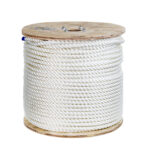
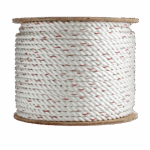
We stock 3-Strand Natural Fiber Manila Rope across a full range of diameters and lengths, including custom-cut and bulk options, backed by one of the largest rope inventories in the industry.
Call our team at 708-377-1084 to talk through diameter, grade, and application, or view full details at erinrope.com/material/manila.