
Product Feature: Conduit Measuring Tape
Conduit measuring tape is a purpose-built product designed to fish through conduit, measure the run in a single pass, and provide crews with an accurate footage count they can trust for material planning and cable ordering. At Erin Rope Corporation, we manufacture conduit measuring tape at our facility in Blue Island, Illinois. In this guide, we’ll cover how it’s constructed, where it fits in the installation workflow, and why accurate measurement directly impacts project cost.
What Is Conduit Measuring Tape?
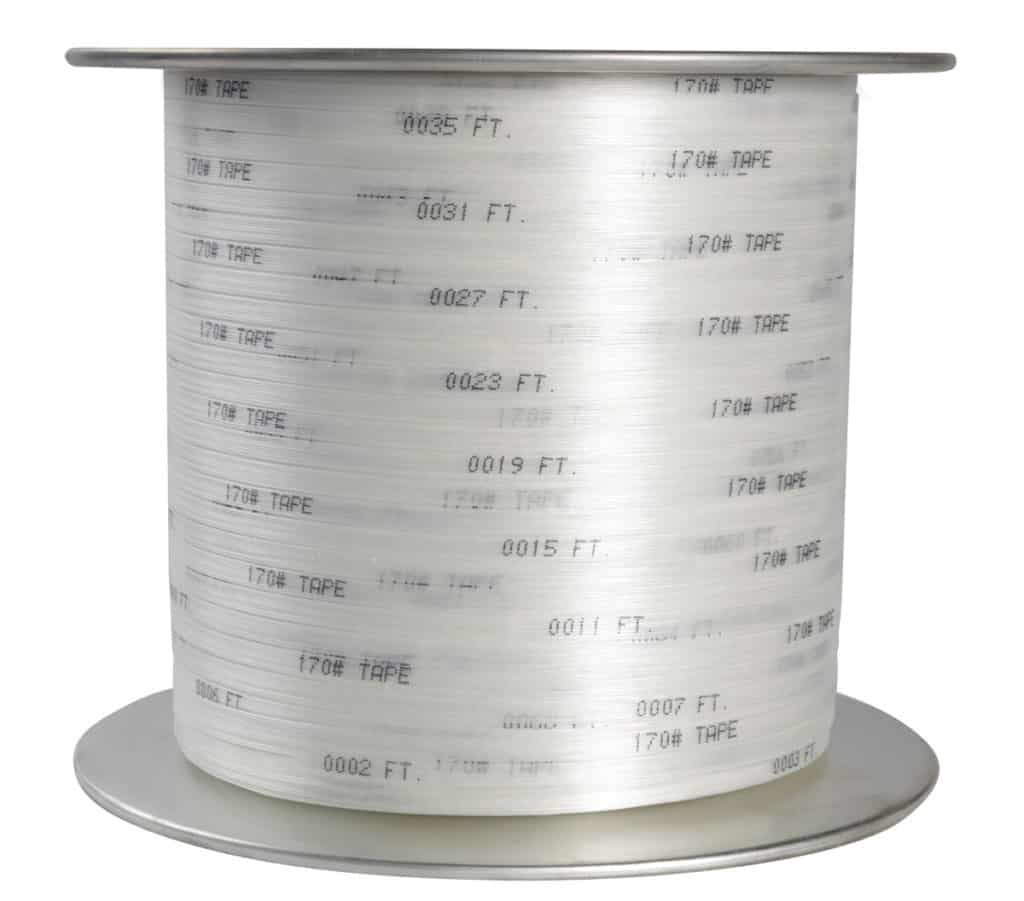
Conduit measuring tape is a flat, narrow polyester tape with sequential footage markings printed in one-foot increments along its full length. It’s designed to be pushed or blown through empty conduit to measure the total run distance before a pull tape or pulling rope is threaded.
It is not a pulling medium. With a tensile strength of 130 lbs., conduit measuring tape is built for measurement, not load. It’s the step before the pull that tells crews exactly how much conduit they’re working with, how much cable to order, and how much pull tape or rope to stage.
Using pull tape to measure wastes a higher-cost, higher-strength product on a job that doesn’t require it. Using a fish tape to measure gives you a pass/fail on whether the conduit is clear, but no footage count. Conduit measuring tape fills the gap between those two tools.
Construction and Material
100% Polyester
The tape is woven from stranded polyester fibers, which provide low elongation, good abrasion resistance, and consistent dimensional stability. Polyester does not absorb water, so the tape won’t swell, rot, or degrade in wet conduit. It maintains its printed markings and physical properties whether the conduit run is dry, damp, or partially flooded.
Flat Woven Profile
The flat construction allows the tape to feed smoothly through the conduit without bunching or twisting. At 3/16” wide (1/4” overall width), it navigates bends and sweeps with minimal friction. The low profile also means it doesn’t occupy significant conduit space, which matters in smaller-diameter runs.
Pre-Lubricated
Each reel ships pre-lubricated to reduce surface friction during threading. In long runs or conduit with multiple bends, that lubrication helps the tape travel farther with less resistance. This reduces the need for additional lubricant application and saves setup time.
Sequential Footage Markings
Clear, sequential footage markings are printed directly onto the tape in one-foot increments. As the tape feeds through the conduit, the installer reads the footage count at the entry point to determine the total run length. No separate measuring device is required.
Specs
| Part Number | Size | Width | Min. Tensile Strength | Length |
| WPC130 | 3/16″ | 1/4″ | 130 lbs. | 3,000 ft. |
The tape ships on metal reels in a continuous 3,000 ft. length, providing enough material for multiple long-distance conduit runs without splicing or changeover.
Where It Fits in the Installation Workflow
On a typical conduit cable installation, the workflow looks like this:
- Clear the conduit
- Measure the run with conduit measuring tape
- Thread the pulling medium (pull tape or pulling rope)
- Pull the cable
Conduit measuring tape tells crews what they’re dealing with before they commit materials and labor to the pull. That measurement drives three downstream decisions:
Cable ordering. Accurate run length means accurate cable orders. Over-ordering ties up the material budget. Under-ordering means a second delivery, a second crew mobilization, and a delayed schedule.
Pull tape and rope staging. Knowing the exact footage lets crews cut or stage the right length of pulling medium. On long runs, that eliminates waste. On short runs, it prevents cutting from a bulk reel when a pre-cut length would have been more efficient.
Tension planning. Run length, combined with the number of bends in the conduit, directly affects the pulling tension required. Having an accurate measurement before the pull lets crews calculate expected tension loads and select the correct pulling medium and equipment for the job.
Why Accuracy Matters More Than People Think
On short, straight conduit runs, measurement errors are forgiving. But the jobs driving the most volume right now involve longer runs, more bends, and tighter tolerances. A 2–3% measurement error on a 200-foot run is manageable. On a 2,000-foot run, that same percentage translates to 40–60 feet of cable, which is enough to blow a material estimate or leave a crew short at the pull head.
The sequential footage markings on conduit measuring tape eliminate the estimation. One pass through the conduit gives crews a footage reading they can hand directly to procurement, project management, or the cable supplier.
Conduit Measuring Tape vs. Other Measurement Methods
vs. Plan-Based Estimates. Drawings give you a design intent. They don’t account for field-routed offsets, as-built deviations, or conduit paths that changed during construction. Measuring tape gives you the actual installed path length.
vs. Fish Tape. Fish tape tells you whether the conduit is clear. It doesn’t tell you how long the run is. You still need a separate measurement step.
vs. Pull Tape with Footage Markings. Pull tape with integrated footage markings (like our 3-in-1 Pull Tape) combines measurement and pulling into one product, but at a higher cost per foot and a tensile rating higher than the measurement step requires. For jobs where measurement is a separate step from pulling, conduit measuring tape is the more economical tool.
Tips for Sales Teams
Pair it with pull tape. Conduit measuring tape and pull tape are complementary products. Measuring tape handles the measurement pass; pull tape handles the pull. Distributors who stock both give contractors a complete conduit installation package.
Sell it for pre-bid work. Contractors bidding conduit jobs need accurate run lengths to price cable and labor. Measuring tape lets them verify field conditions before submitting a number, which reduces change orders and protects margins.
Emphasize the 3,000 ft. continuous length. Competing products often ship in shorter lengths that require splicing on long runs. A continuous 3,000 ft. reel eliminates that step and covers the longest conduit runs crews are likely to encounter.
Position it as a cost control tool. The tape itself is inexpensive relative to the materials it helps crews size correctly. One accurate measurement can prevent thousands of dollars in cable waste or re-ordering costs.
Made in the USA
Our conduit measuring tape is manufactured at our facility in Blue Island, Illinois, and ships same day from one of the largest in-stock rope and pulling product inventories in the industry. View the full product details at erinrope.com/conduit-measuring-tape, or call us at 708-377-1084 for product guidance.