
Galvanized vs. Stainless Steel Cable: Choosing the Right Finish
Galvanized and stainless steel aircraft cable may look similar, but the finish changes how each performs in the real world. While a 7×19 cable has the same construction regardless of finish, the way the steel is protected from corrosion determines where it should be used. Choosing the right finish helps maximize service life, control costs, and ensure the cable performs as intended.
At Erin Rope Corporation, we stock galvanized and stainless steel aircraft cable in a wide range of constructions and diameters. This guide explains how each finish protects the steel, how they compare in strength, cost, and corrosion resistance, the differences between Type 304 and Type 316 stainless steel, and how to choose the right finish for your application.
How Each Finish Protects the Steel
Galvanized Cable
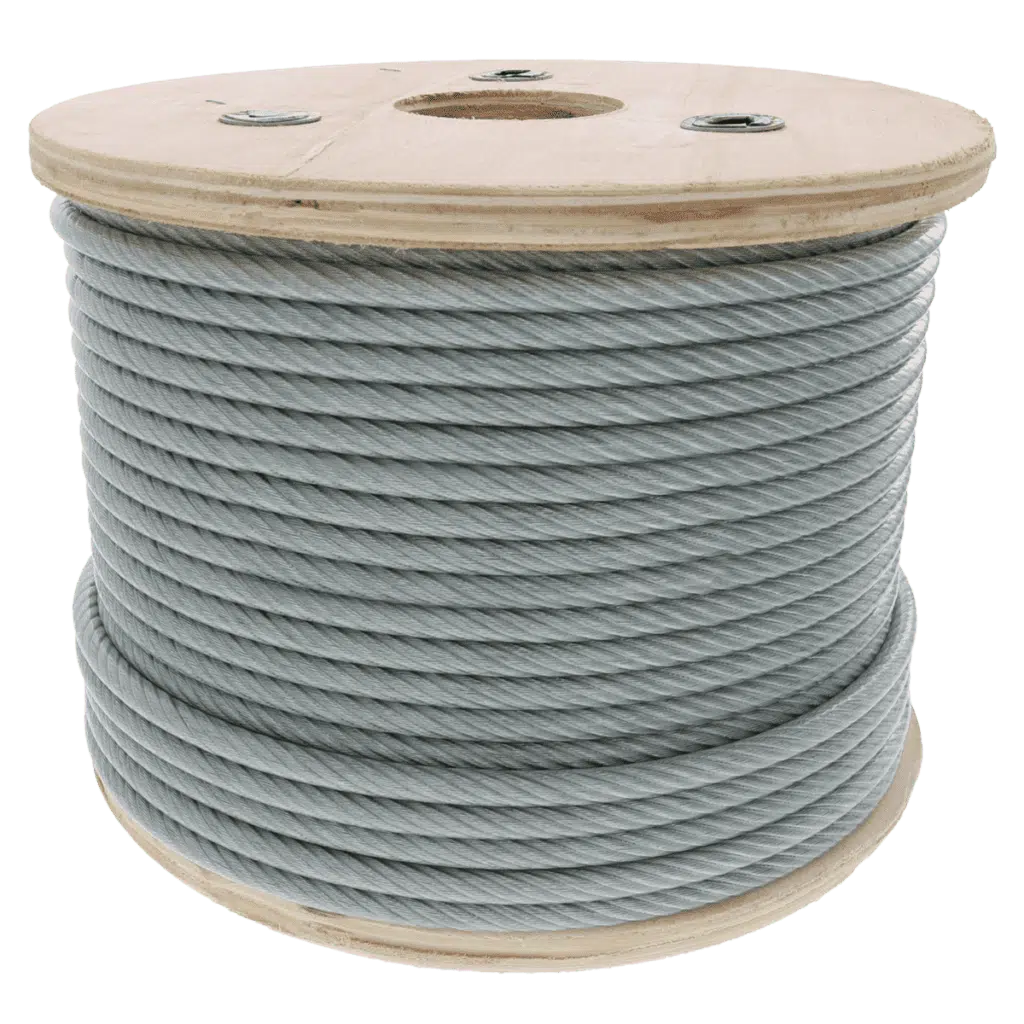
Galvanized cable is made from carbon steel coated with a layer of zinc, most commonly by hot-dip galvanizing. The zinc forms a protective barrier that corrodes before the underlying steel, helping the cable resist rust in mild-to-moderate environments. Because that protection comes from a surface coating, it has a finite lifespan. As the zinc wears away through abrasion or weathering, the exposed steel can begin to rust. That visible change also makes inspections easier by providing a clear indication of the cable’s condition over time.
Stainless Steel Cable
Stainless steel resists corrosion through its chemistry rather than a protective coating. The alloy contains chromium, which forms a passive oxide layer throughout every wire. Because corrosion resistance is built into the metal itself, scratches are less likely to compromise its protection than they can with galvanized cable. That’s why stainless steel is the preferred choice for saltwater and other highly corrosive environments, where it can significantly outlast galvanized cable.
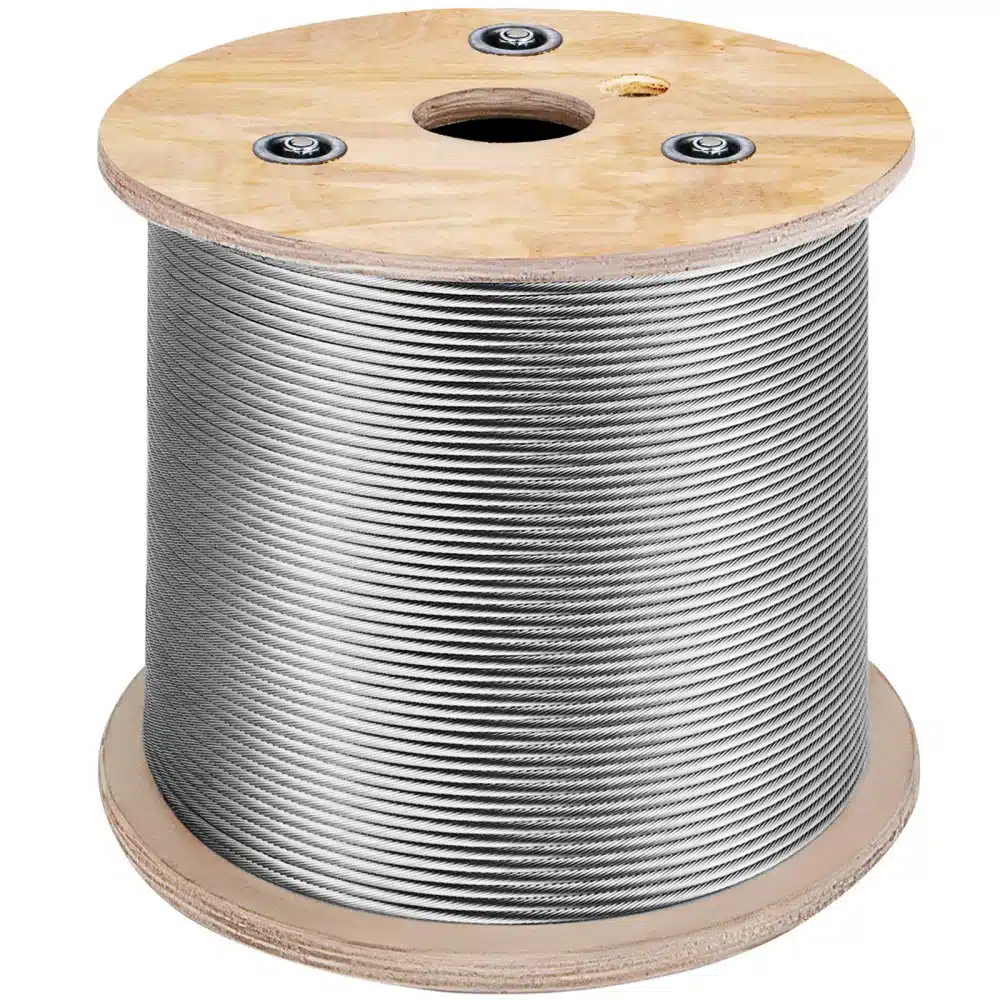
Type 304 vs. Type 316 Stainless
Not all stainless steel offers the same level of corrosion resistance. The two grades most commonly used for aircraft cable are Type 304 and Type 316.
| Grade | Composition Note | Typical Use |
| Type 304 | Approximately 18-20% chromium; excellent general corrosion resistance | General outdoor, architectural, railing, most marine-adjacent work |
| Type 316 | Adds molybdenum for enhanced corrosion resistance | Direct saltwater, coastal, chemical exposure |
Type 304 is the most common and cost-effective grade for general outdoor use. Type 316 contains molybdenum, which improves its resistance to chlorides and other corrosive elements. When an application involves constant saltwater exposure or harsh chemicals, the added durability of Type 316 often justifies the higher cost.
How Galvanized vs. Stainless Steel Cable Compares
| Property | Galvanized Cable | Stainless Steel Cable |
| Corrosion protection | Zinc coating; good in mild to moderate conditions | Chromium alloy; excellent, including marine |
| Relative strength | Generally higher at a given size | Slightly lower at a given size |
| Cost | Lower | Higher |
| Best environments | Interior, dry, mild outdoor, industrial | Coastal, marine, high-humidity, wet |
| Maintenance | Inspect coating; rust once zinc wears | Low; periodic cleaning in salt air |
| Appearance | Matte gray, dulls over time | Bright finish, holds appearance |
Each finish offers a different balance of performance and cost. Galvanized cable generally offers higher strength for a given diameter and is lower-cost, making it a practical choice where corrosion exposure is limited. Stainless steel delivers significantly greater corrosion resistance and maintains its appearance over time, although it typically costs more and offers slightly lower strength at the same diameter.
The best choice depends on the environment where the cable will be used.
Matching Finish to Environment
- Interior and dry environments. Galvanized cable is the economical, capable choice where moisture is limited.
- Mild to moderate outdoor. Galvanized cable performs well in general outdoor and industrial settings when the zinc coating is inspected periodically.
- Coastal and high-humidity. Stainless steel is worth the added investment where salt air and constant moisture accelerate corrosion.
- Direct saltwater and marine. Type 316 stainless steel is designed for continuous exposure to saltwater and highly corrosive conditions.
- Visible and architectural. Stainless steel maintains its appearance over time, making it a popular choice for railings, cable displays, and other exposed installations.
A Note on Inspection
Galvanized and stainless steel cable age differently, so inspection priorities differ as well.
Galvanized cable provides visible signs of wear as the zinc coating deteriorates and rust begins to appear, making routine visual inspections relatively straightforward. Stainless steel typically resists corrosion much longer, but inspections should still check for broken wires, abrasion, fatigue, and other signs of damage in addition to corrosion.
Regardless of the finish, broken wires, corrosion, or deformation are signs the cable should be evaluated for removal from service.
Our guide to rope inspection and retirement covers the evaluation framework, and our comparison of 7×7 and 7×19 aircraft cable constructions covers the build side of the same selection decision.
Important: Minimum break strength figures for cable describe new, unused product and are not working loads. Working loads are established by applying an appropriate safety factor for the application and its governing standards. Cable that shows corrosion, broken wires, or deformation should be evaluated for removal from service. Always follow the manufacturer’s specifications and applicable standards.
Why Finish Selection Matters
Choosing between galvanized and stainless steel is about long-term value, not just upfront cost. Galvanized cable is often the most economical option for dry or mildly corrosive environments, while stainless steel can reduce replacement costs in coastal or high-moisture applications by lasting significantly longer. For distributors and suppliers, asking where the cable will be used can prevent costly specification mistakes.
Browse our cable and wire rope lineup at erinrope.com, or contact our team at 708-377-1084 for finish guidance and cut sheets on any construction or diameter.
This article is general educational information about cable finishes. It is not technical, safety, or engineering advice and does not state the load any cable can carry. Always follow the published specifications, applicable standards, and the guidance of a qualified professional when selecting and using cable.