How To Cut Rope: Step-by-Step Guide
Proper rope care and use start well before the rope ever goes into service.
Whether you’re preparing rope for cable installations, marine use, rigging, or general industrial applications, proper rope-cutting technique helps prevent unnecessary maintenance and performance issues. In this guide, we’ll walk through best practices for cutting rope to help prevent wear and maintain the integrity and longevity of your rope products.
Step One: Identify the Rope Material
Synthetic and natural rope fibers respond differently to cutting. Knowing the composition of the materials you’re working with helps prevent unnecessary damage during and after the cut.
Synthetic rope
Polypropylene, polyester, nylon, and UHMWPE ropes are engineered to be strong, abrasion-resistant, and stable under load. These materials usually respond best to heat cutting because the fibers soften slightly and fuse together at the cut point. That sealed edge helps keep strands intact and improves durability during handling.
Natural fiber rope
Manila, sisal, cotton, and other natural fibers require a different approach. They should be cut mechanically and then secured with binding or splicing. Heat sealing isn’t appropriate for these materials as it can burn the raw material.
Step Two: Stabilize the Rope Before Cutting
Before you make a cut, stabilize the rope. We recommend wrapping tape tightly around the intended cut location or clamping the rope in place.
Stabilization before a cut helps:
- Maintain the rope’s shape
- Keep fibers aligned
- Produce a cleaner, more controlled cut
Skipping this step can result in uneven ends or loose strands that require additional finishing later.
Step Three: Heat Cutting for Synthetic Rope
Electric hot knife cutting tools are commonly used to cut synthetic rope because they cut and seal fibers in one motion. Compared with mechanical cutting, heat cutting helps:
- Reduce fraying
- Produce smoother rope ends
- Minimize post-cut finishing work
For teams that regularly cut rope, these tools are both consistent and convenient.
Step 4: Finishing the Rope End
Once the rope is cut:
- Check that rope fibers are fully sealed
- Trim excess melted material if necessary
- Secure natural fiber rope ends with binding material
Proper finishing makes the rope easier to handle, especially when threading through hardware, tying knots, or performing splices.
Product Spotlight: Electric Hot Knife Rope Cutter
Electric hot knife rope cutters are versatile, efficient tools designed to cut and seal synthetic ropes while preventing fraying and unraveling. Powered by a standard 110 V AC supply, the tool reaches 1200°F, ensuring quick, clean cuts with fused ends. It accommodates ropes up to 1 inch in diameter.
The tool can be mounted on a workbench or wall for increased stability. Built for continuous operation, it is perfect for high-demand environments where speed and precision are essential.
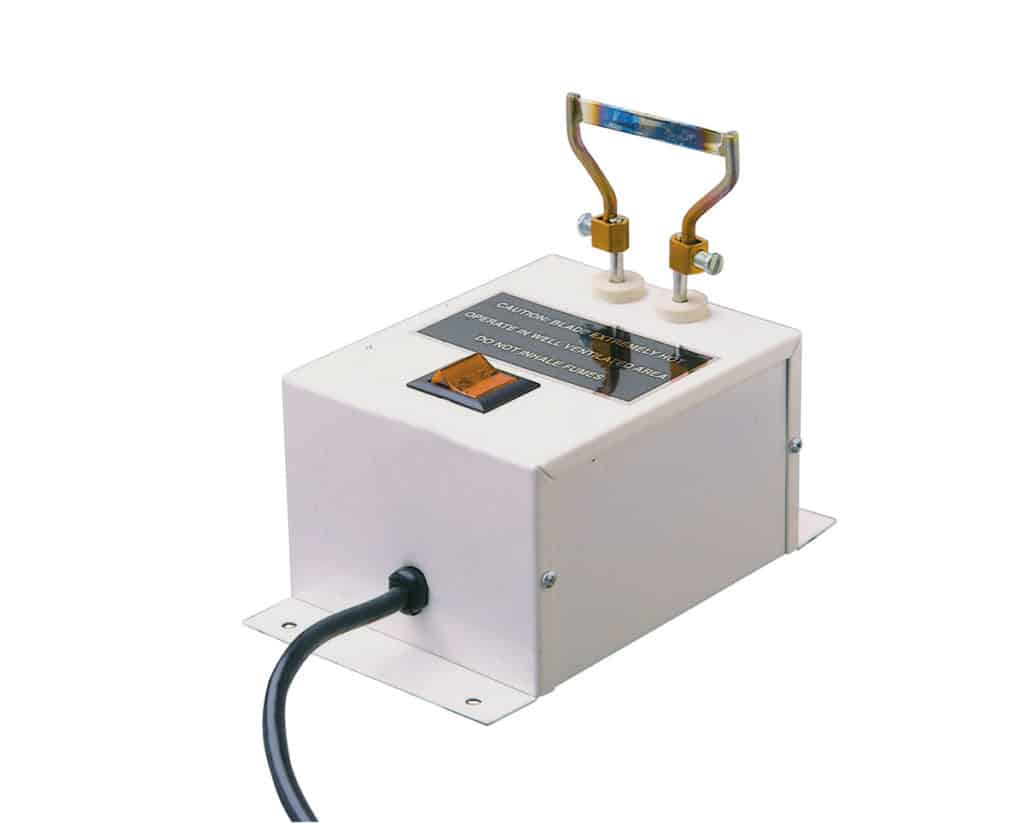
Our Electric Hot Knife Rope Cutter is designed to provide:
- Consistent results for repeated cutting tasks
- Controlled heat for clean synthetic rope cuts
- Sealed ends that resist fraying
Common Rope Cutting Mistakes
Cutting before the tool reaches temperature: This can pull fibers rather than sealing them.
Applying excessive force: Let the heated blade do the work. Pressure can distort the rope or produce uneven ends.
Skipping finishing steps: Even clean cuts can benefit from a final inspection and occasional trimming, depending on the material.
Small adjustments here help prevent avoidable wear or handling frustrations down the road.
Safety Considerations
Cutting tools, especially heated ones, require basic safety precautions:
- Work in a ventilated area
- Wear appropriate hand and eye protection
- Keep flammable materials clear of the area
- Allow tools to cool fully before storage
Proper Rope Care Improves Performance and Service Life
A rope’s performance can be affected well before it ever carries a load. Storage, handling, inspection, and proper preparation all affect how a rope performs over time.
Cutting rope correctly is a foundational step. When done properly, it helps maintain fiber integrity, improves handling, and supports consistent performance across demanding applications.
To learn more about care and use guidelines for specific rope materials, visit our Care and Use Guide. For more specific questions or concerns, contact an Erin Rope Sales Representative today.