Nylon Mason Line: Braided vs. Twisted
Nylon Mason Line (aka Seine Twine)
Nylon mason line (aka Seine Twine) plays a critical role in layout, alignment, and measurement across a wide range of concrete and masonry tasks. While it’s a simple tool, its performance directly affects accuracy on the job. Choosing the right construction, braided vs. twisted, ensures the line stays tight, visible, and reliable throughout the project.
This guide explains how mason line is made, how each construction behaves in the field, and what to consider when selecting the right twine for your next job.
Mason Line and Its Role on the Jobsite
Mason line helps crews establish straight, visible reference points that guide block alignment, formwork layout, grade lines, and spacing for concrete pours. A good line must hold tension, resist the elements, and remain easy to see in bright sunlight or dusty conditions.
Nylon is one of the most trusted materials for mason line because it holds its shape, resists abrasion, and maintains performance despite outdoor exposure.
Erin Rope Corporation manufactures high-quality nylon mason line designed to support these demands with long-lasting durability and strong visibility in everyday jobsite conditions.
How Mason Line Is Constructed
Two primary mason line constructions dominate the industry: twisted and braided. While both are made from strong nylon fibers, the construction method shapes how the twine behaves under tension, how it handles knots, and how long it lasts in the field. Below is a quick comparison guide, followed by a more in-depth look at each construction type and its use cases.
Braided vs. Twisted Mason Line: Quick Comparison
| Feature | Twisted Nylon Mason Line | Braided Nylon Mason Line |
| Construction | Nylon strands twisted together | Fibers woven into a uniform braid |
| Feel | Firmer texture | Smooth, flexible |
| Durablity | Strong for everyday use | Longer-lasting, holds shape over time |
| Knot Performance | Excellent knot grip | Secure but not as aggressive |
| Stretch/Tension | Slight stretch; easy to tension | Very stable across long spans |
| Best For | Quick layout, block work, frequent resets | Precision work, long runs, high-tension lines |
Twisted Nylon Mason Line
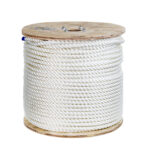
Twisted mason line is made by spinning multiple nylon strands together into a tight twist pattern. This method gives the line a firm texture, which helps with knot retention and makes it easy to splice if a section becomes damaged.
Twisted mason line ties quickly and responds well to frequent fastening and unfastening throughout the workday. The slight stretch in twisted construction also helps maintain tension when pulled between stakes or corner blocks, allowing crews to work at a steady pace without constant readjustment.
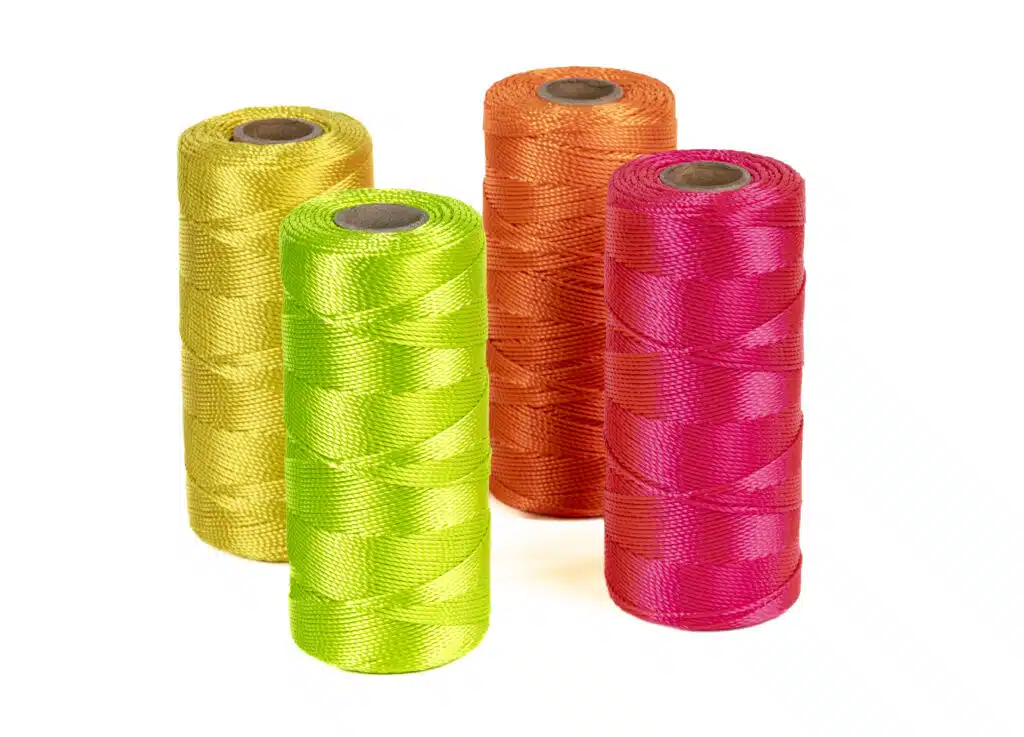
Erin Rope’s twisted nylon seine twine is manufactured from premium nylon for dependable strength and abrasion resistance. Its UV- and rot-resistant characteristics support outdoor work, and the bright color options improve visibility when establishing reference lines over long distances.
Braided Nylon Mason Line
Braided mason line is created by weaving multiple nylon fibers into a uniform, rope-like structure. The resulting twine has a smooth surface, excellent flexibility, and a shape that holds up well under repeated use. Unlike twisted line, braided construction resists unraveling, which contributes to its longer service life.
This construction performs particularly well in jobs requiring long, uninterrupted spans. The line’s smooth profile reduces friction and prevents snagging, which helps maintain a straight, consistent reference line over extended runs. Braided mason line also absorbs shock more evenly, helping it avoid distorting under sudden tension or movement.
Erin Rope’s braided nylon mason line is designed for durability in harsh outdoor environments. The line resists UV exposure, rot, and mildew, and the bright color offerings ensure it remains visible during layout or alignment work. Its strong, stable construction makes it the preferred option for precision tasks where straightness and consistency matter.
Braided vs. Twisted Mason Line
Both types of mason line perform well, but they excel in different situations. Twisted line supports fast tying, reliable knot performance, and easy splicing, which are qualities that crews appreciate during routine layout and general construction work.
Braided line offers a smoother feel, longer lifespan, and greater stability across long spans, making it better suited for precision alignment and high-tension applications.
Contractors often keep both types in their toolkits because no single construction serves every scenario equally. Choosing between braided and twisted comes down to how the line will be used, how often it needs adjustment, and the environmental conditions it will face.
Benefits of Nylon Mason Line
Nylon remains the preferred material for professional-grade mason line because it withstands prolonged outdoor exposure without weakening. It resists abrasion from concrete block and formwork, holds tension effectively, and maintains visibility across a variety of lighting conditions. Nylon’s inherent strength also gives the twine a long service life, even when used daily.
Erin Rope Corporation produces premium-grade mason line to meet the performance standards that contractors expect. Whether braided or twisted, each option is made with quality nylon fibers engineered to withstand UV exposure, rot, and mildew. The bright colors improve accuracy during layout work by giving teams a clear visual reference point regardless of distance.
Which Mason Line Should You Choose?
If your priority is quick tying, strong knot performance, or line that can be easily repaired on the spot, twisted nylon is often the better fit. When precision, long-span stability, and long-term durability are more important, braided nylon is the stronger performer.
Both constructions deliver excellent value, but the right choice depends on your project’s requirements and how your crew works.
Erin Rope Corporation offers both braided and twisted mason lines in a variety of sizes and high-visibility colors, giving contractors the flexibility to choose the twine that best supports their workflow and environment. Contact our team today to learn more and find the best fit for your next project.